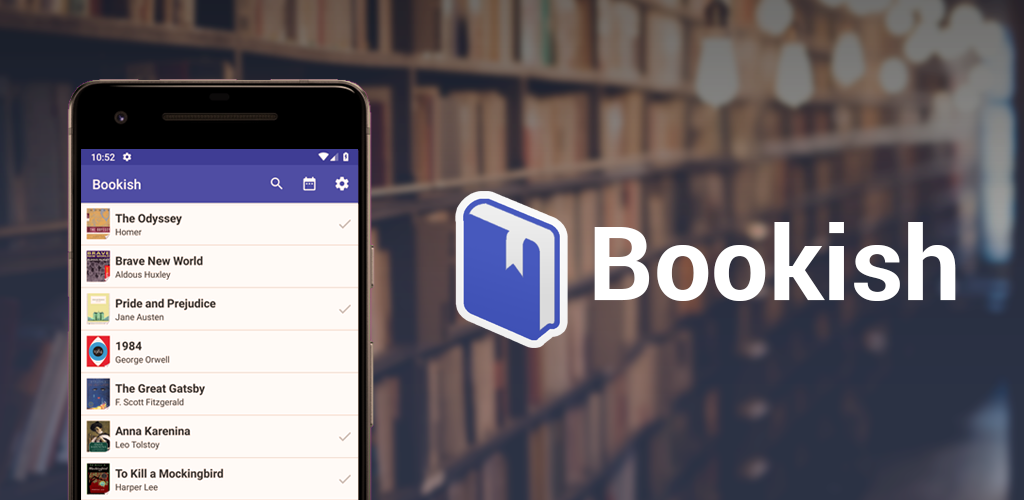
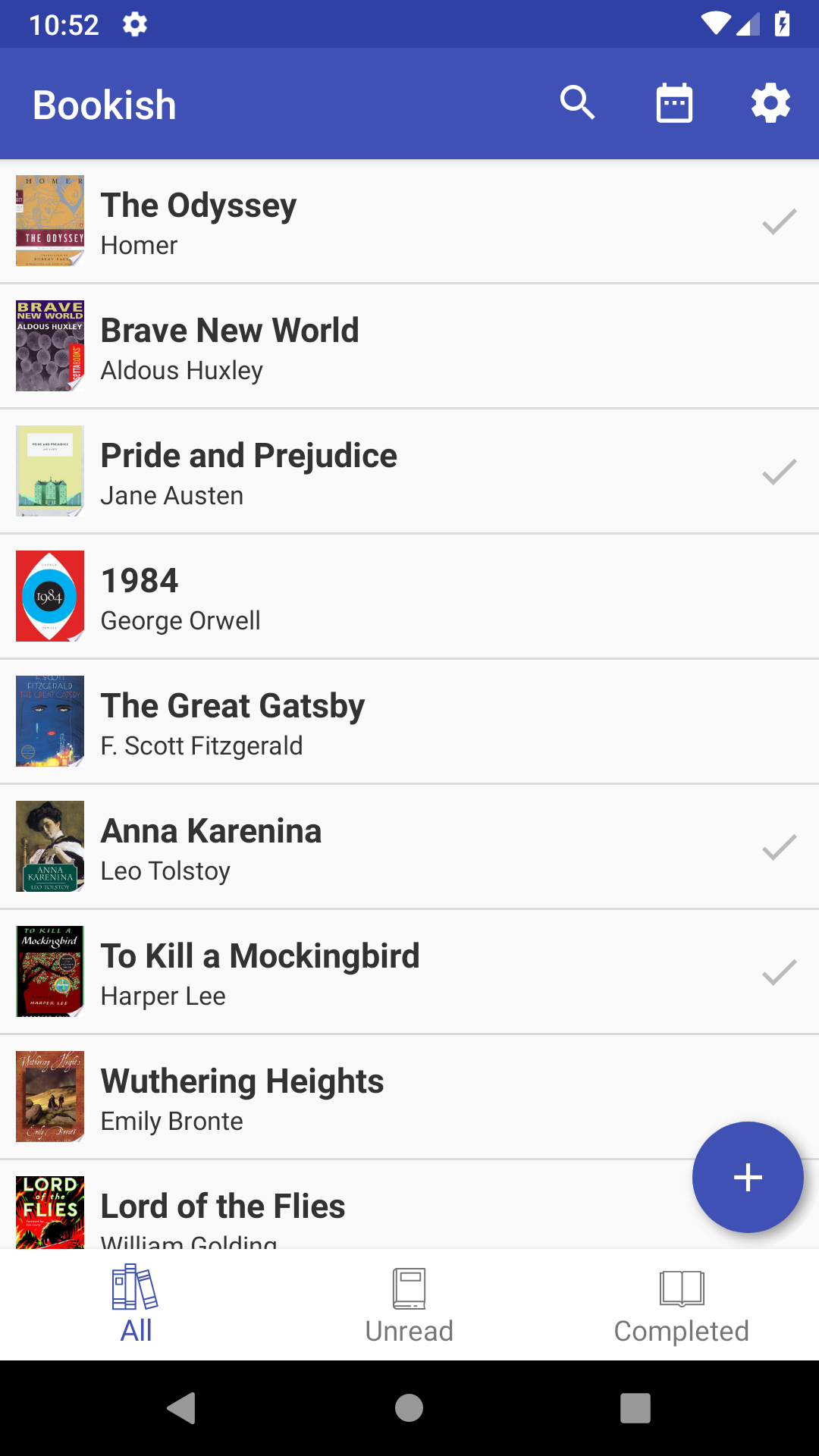
Bookish is a barebones reading list manager to keep track of books you’ve read, are re-reading, or want to read. It’s intentionally super simple - no in-app purchases, intrusive ads, annoying social media functions, or data harvesting of any kind.
Features:
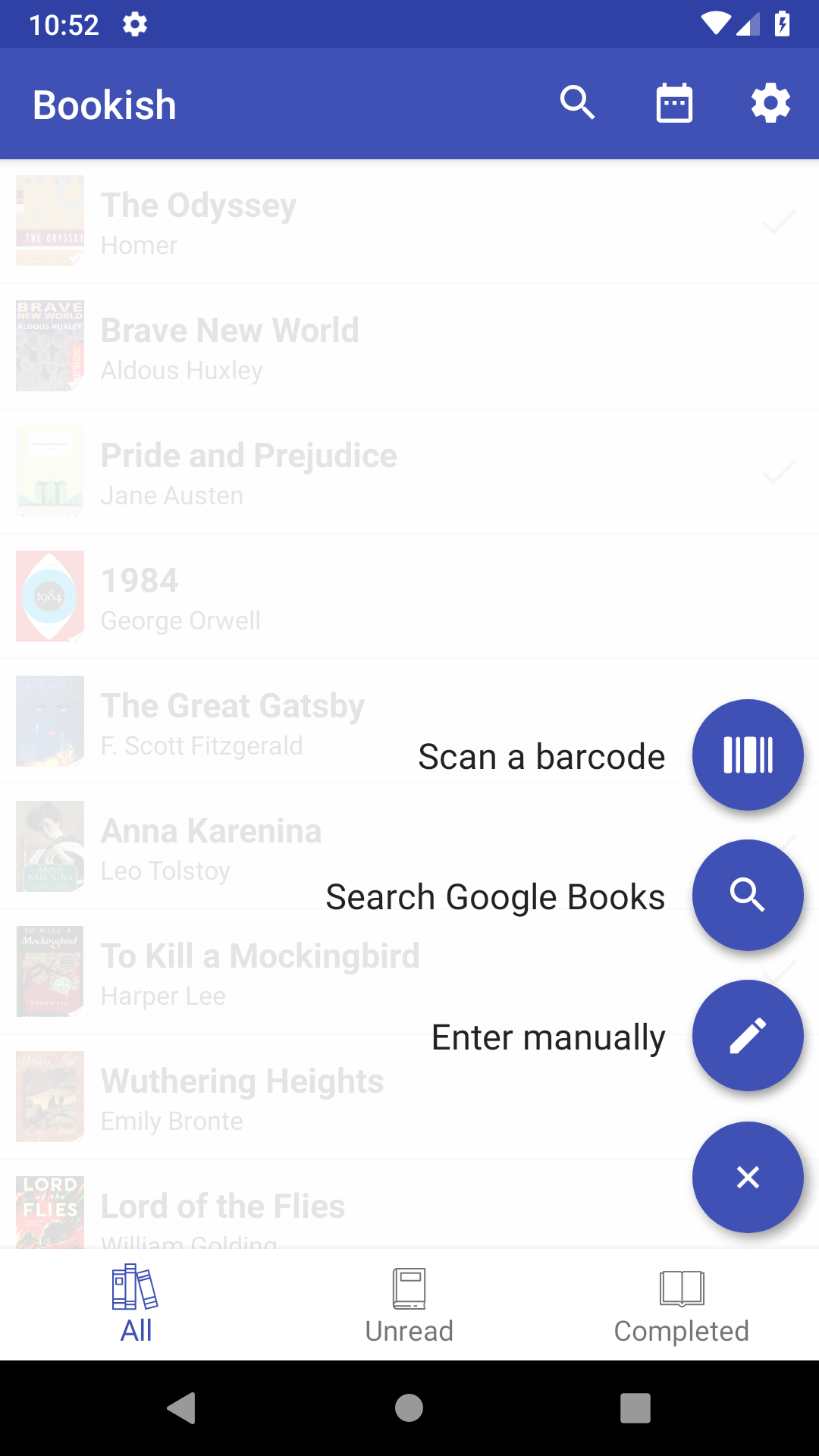
- add books by scanning a barcode, searching the Open Library database, or entering the information manually.
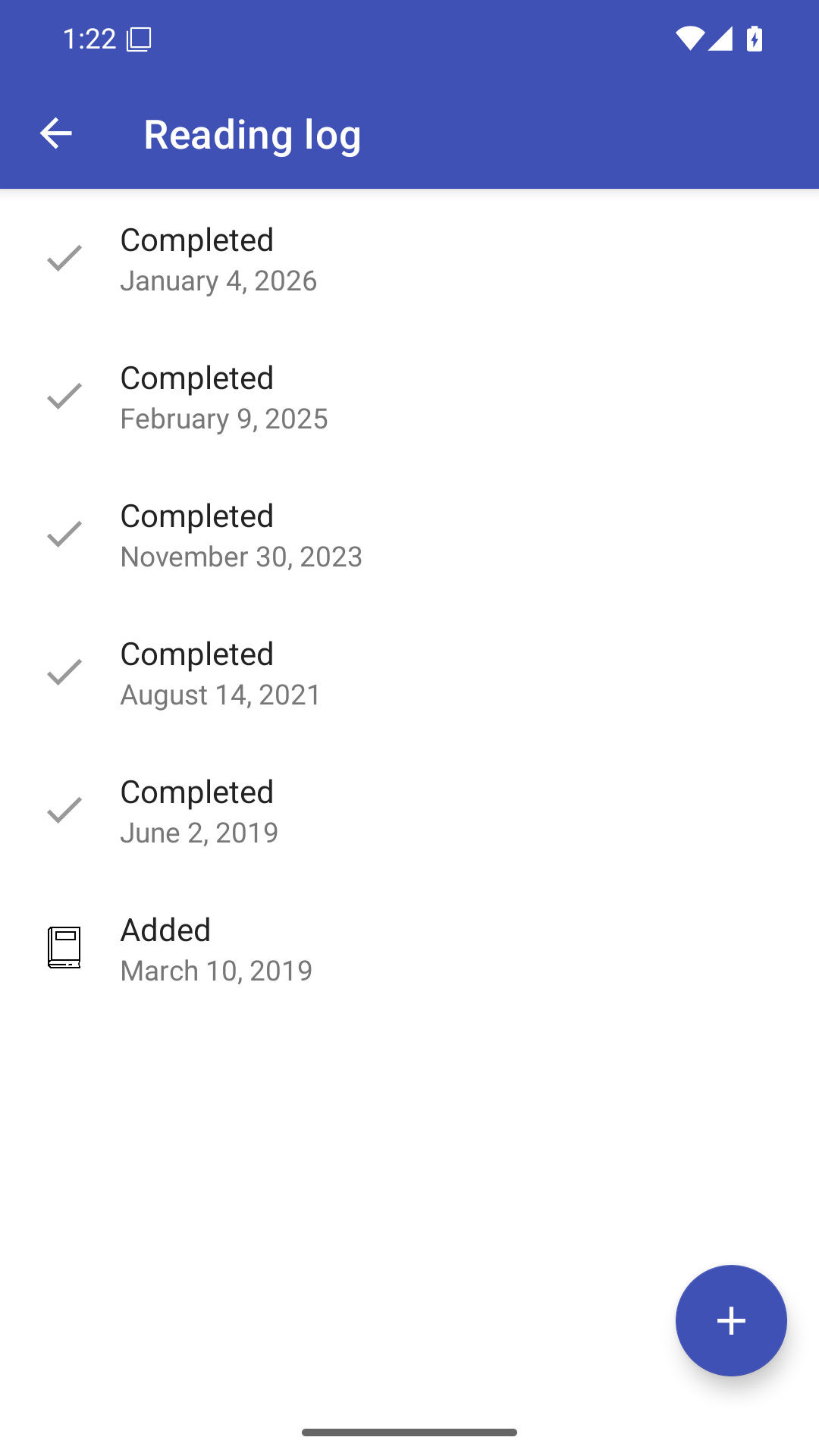
- record each time you finish a book rather than just the last one, so re-reads are all kept, and mark the ones you gave up on as abandoned.
- explore your collection alphabetically, chronologically, or by seeing which ones you’ve completed and which ones are still waiting to be read.
- enjoy a minimal, clean, intuitive design pared down to the essential features of a reading list manager.


User privacy policy
Bookish is a free app, developed by me (James Calixto) “as is” without express or implied warranty. If you have any questions or comments about this Privacy Policy, or about Bookish in general, you can contact me here.
Bookish is privacy-focused by design. No personally identifiable or user-sensitive information is accessed, collected, stored, or shared. This policy includes data about your usage of Bookish as well as data about your usage of Open Library. I have also disabled Android’s built-in analytics and bug reporting.
The most granular data I can see is an aggregated dashboard of installs per day, by country, which is collected and stored securely in the Google Play Console. I cannot disable this, and this data is not personally identifiable.
Regarding a data retention and deletion policy — since I do not access, collect, store, or share any data (aside from the Google Play Console aggregate metrics mentioned above), there is no data to retain and no data to delete.
Your library is stored locally on your device and is not shared with anyone, including me (unless you use the export feature and share the file yourself).
Aside from Open Library and the barcode scanner, both detailed below, there are no third-party integrations (in-app purchases, ads, social media plugins, etc.), so no data is sent to other parties.
Looking up a book sends what you type to Open Library. This is a direct query from your device to this API endpoint, and cover images are loaded from their image server. I am using the public endpoints without any token or other authorization mechanism, so I do not (and cannot) collect any data about your usage of them.
Scanning a barcode hands the camera to Google Play Services, which shows the scanner in its own process and returns only the number it read. Bookish never sees the camera, and does not ask for the camera permission.
Open Library is run by the Internet Archive, whose Terms of Service are available here.